Thursday, March 20, 2008

ON FAMILIAR GROUND BUT ITS BEAUTY ESCAPED US.LET'S EXPLORE OUR HERITAGE

GO anywhere in the rural areas of the country or in the older parts of towns, you will not find any two homes the same. Then there was no housing estate or ‘taman’ as we have now. Especially the traditional wooden houses would stand out in features of their own. The carpenters or ‘tukang rumah’ who were given the task to construct the homes labored on for months to finish their task at times with the crudest of tools and more often without the support of modern mechanical machinery. They did not resort to architectural designs but instead held on to imagination, combined skills, availability of materials, site constraint, budget and the most simplified sketches. The ordinary plane would be used for the wood works. Sharp axes would be handy for most cuttings and trimmings. No electrical support. Not even a cement mixer on sight to help. Brute strength and ingenuity would see heavy wooden pillars hauled and propped up. It would be a labor of love. With added traditions and ‘pantang larang’ in all aspects as the works progressed the home when completed naturally offered solace and strength to its owner and family.

It is therefore a sight to behold whenever we come across homes that inherit such characteristics. Not many are left standing and those that do deserve our attention; in whatever way.


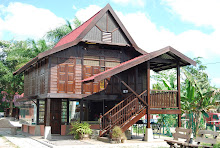
While in a town in south Kedah, we came across this house by the main road. One would pass by it everyday but would never stop to give a glimpse thinking it is just another wooden house. Without fresh colorful paint work and instead darken by years of oily smeared timber frame it continues to escape attention. Yet at closer look, you would not mind calling it your own home, if the owner dares to part with it. That would be the last straw of course. It is a family home and certainly vibrates with life during Aidil Fitri or days when the whole family comes home.

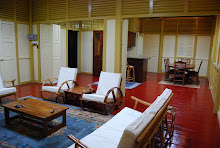
Like typical Malay traditional home designed to suit the tropical climate, we would certainly notice directions at providing excellent ventilation throughout the home. This upstairs living room for example, ornately crafted from the outside, has wide windows even with louvers. Their upper sections are covered with panels with motifs of varied design. These air holes so craftily designed mesmerized us yet effectively they provide total air distribution throughout the house.

Looking closely, we see the white painted frame built up half-way at the opened window. While providing safety, it also allows inflow of fresh air when the windows are opened wide.


Taking a closer look around the house, we saw more floral or motif designs that are placed at strategic sections of the house. The facial-board fringing the whole house added to the beauty and pain staking care the original owner and craftsmen or ‘tukang rumah’ had taken in earlier time.


This is the house with the recent added section underneath. Though the owner gets more living space, he has indirectly halted good ventilation. Notice also the front staircase has ‘five’ steps (anak tangga). We would never counts steps with even numbers.


Now would you want this house? Only a skeleton of the house is left.

Nevertheless it has a characteristic of its own and we are banging on having it rebuilt and renovated. Wait until it is relocated and rebuilt. Hopefully we can show the picture again with its old splendor and in a better location. We found this house at Alor Janggus near Alor Star Kedah.

In an earlier story I have described how such homes have been sought after, relocated and built again to become ‘home stays’ much sought by foreigners as well as discerning visitors who want to feel the nostalgia of the past. Contact me later. We may help you discover that theme.

An Old Malacca House at FRIM Kepong Selangor.

A return visit to FRIM (Forest Research Institute Malaysia at Kepong Selangor) recently, led us to discover two old buildings on the site. One was a Malacca home known to have been built as early as 1917 which make it almost a century old now. The other is a Trengganu House just as ancient as the other. It is to be noted that many institutions have embarked on adopting old homes and rightly helped to conserve them on their sites for posterity. FRIM is one. The National Museum is another. In Alor Star two old homes stood adjacent to one another, outside Wisma Darulaman, the state’s central office complex. Institutions like universities, hotels and corporations go about preserving these treasures.


Varied design and motifs decorated the ‘papan timbul’ or the quarters of the window – panes. These were not painted on but simply etched onto the timber planks and doors. These rich ornamental decorations of varied flower designs lent much richness to the Malacca House.

Added to that intricate trellis as seen on the wall here magnified the characteristic beauty of this old home. We could not help wondering the perseverance of the craftsmen.


An Old Trengganu House at FRIM Kepong


For those around Kuala Lumpur, there is a shortcut should you want to visit a Trengganu home. Just head for Kepong and at FRIM you will see this building standing on an open field. The huge timber framed house with no less than twenty-eight upright standing pillars should withstand it from even moving or sinking. The opened veranda you move into upon climbing the staircase is large enough to accommodate a community centre.

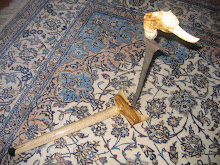
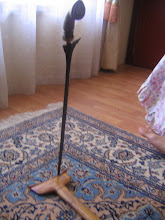
Observe the solid foundation, compactness and structure of the house. The rich forested land in Trengganu gave quality timber for such homes. The myriad pillars seemingly sprouting out of the ground replicated the rich abundant timber trees that grow in the vicinity. Craftsmanship inherent in Trengganu is translated not only in the home they built but go beyond into boat making, handicraft, wood-carving and keris making skills.

Surely we move on familiar ground but many scenes escape us for lack of indulgence and maybe preoccupation with other matters thus leaving the commonality and those dear to our hearts distance away. What is the salvation that we look for?

Sunday, March 16, 2008

WINNERS AND LOSERS

In any game, competition or even war at its highest stake, there is bound to be a winner and a loser. Only what do we get out of the spoilt of war? We see devastation, pain, suffering, maimed bodies and hospitalization and care for thousands of victims. Plus of course recourse at building up from stretch; picking up the pieces, building life again and not to mention stretches of new graves to honor or mourn the departed.

Fortunately, images of war are far away now. Those in the senior categories may perhaps have glimpses of it. The Second World War has eclipsed drowning away the catastrophe and sufferings since it happened sixty plus years ago. Yet the continuing infighting and subjugation of Iraq as an example continue to haunt us. Still there is hope at the end of the rainbow. Only when will it come.

Malaysia has a game to play or perhaps a ‘battle’ to fight every five years or earlier and it has always been keenly competed with allowance for preparation or gearing up to the crescendo. The last was done in 2004. This time around, the days given were more favorable with nomination on 24 February and Election Day 8 March 2008. That gave all competitors good preparation days.

On the subject of Malaysia’s General Election, the twelfth in the nation’s history, after all the emerging stories and inconclusive directions taken or being taken by the winner and loser since the results were announced 9 March 2008, I am struck to look at its resulting outcome.

Just now, I had just returned from the first Friday prayer after the General Election. I happened to be at Langkawi and so this Friday prayer was performed at Masjid al-Hana Kuah Langkawi which incidentally is undergoing extension and renovation. It was normalcy all the way, though there was I think a bigger attendance than usual. With exception it was the first time that the new State Government of Kedah is in position after winning the recent election. I had a feeling that the ‘jumaah’ expected to hear something. The sermon or ‘khutbah’ as always read by the ‘bilal’ at Friday prayer sessions this time sounded a little different. Not in the delivery but the content. Candidly congratulation was offered to the ‘Adun’ and ’Parliamentary’ winners of Langkawi besides all the winners in Kedah and in Malaysia as a whole. The ‘khutbah’ took leadership as its core title and it elucidated some of its strength and wants. It even compared the leader to that of the ‘imam’, who takes position in prayer just a few steps ahead but still close to the ‘makmum’ and of course he is righteous, knowledgeable and respectable in the community. No doubt even ‘imam’ may be cautioned, advised or even replaced. Quotes from the Koran eliciting true and rightful leadership filled the content of the ‘khutbah’. It was a striking reminder to all and especially those who have been selected to lead as a result of gaining greater votes in the recent election. That PAS now governs Kedah, it too has to show exemplary examples.

As I sat in the mosque listening to the ‘khutbah’ or sermon, it crossed my mind the major losses that the preceding government in power had surrendered away. One that immediately came to mind was the very loss of a great platform. The government in power has the great opportunity to speak to the rakyat from the mosque’s ‘mimbar’ or pulpit. In a state like Kedah with strong Malay population, the weekly Friday sermons if correctly written and effectively delivered would be a source of strength helping to bind the community together. That I think is a major loss but a bountiful gain by the new government in power. It smacks hard that Jabatan Agama Islam Negeri will be a source of strength. Tok Haji Aziz of Kelantan has solidified this source of energy.

That of course led me to think of other give-away the BN government has squandered away to the benefit of the conqueror. Could it be that the previous government or adversary never actually itemize or far less evaluate the strength and holdings that they possessed? This is just like going to war unprepared not realizing one’s strength and weaknesses. Of course these thoughts came creeping within me much later after the prayer has be offered and completed.

There is much strength or fortitude that the BN government alongside its component parties surrendered away though officially it still formed the federal government. Recovery is hard to come by with their loss unless a thoroughly concerted effort is made. Given the next four years or so the losers as well as the winners have to fortify each other’s fortress and avoid any erosion.

What are the other ingredients that have been surrendered away? I list the following as huge contributions that the loser has given away. No doubt it can always be argued that BN is still in control but not in all territories especially in the states where it has no control now.

i. Governance
ii. Security and Media
iii. Authority
iv. Finance
v. Publicity
vi. Domestic and Foreign Affairs
vii. Grass Roots
viii.Trust
ix. Votes
x. Expectations.

No doubt you may record your own perceptions based on where your ‘cross’ or ‘pangkah’ went on Election Day or where your membership or support stood. I do not wish to detail out the above but suffice to state that each one possess its strength and benefit and losing one or all would only deal the death knell.

I am arguing that if only the leaders and the parties concerned had look hard at their ‘ammunitions and strength’ and prepared to guard and defense their position and not weaken their fortitude by aimless movement of guards, directions and chaotic disorder all could be saved. Then again they also decided to move their generals or commanders around and even replaced.

The winners or conquestors must be surprised at their winning streak but they must also thank their planning and strategy and of course the grassroots plus the voters that swayed to their side.
Just looking at how the Japanese Army entered Malaya 7 December 1941 and cycling down through the peninsular and then entering Singapore which had its big guns pointing southwards into the sea and at a calculated time is a stroke of genius. Not to mention that their own people were already in the country to help towards logistic and local advice.

Timing is an essence. The 13th of the month could be a lucky number one moment but essentially it is discarded by many. Ever seen the 13th floor of a hotel listed on the lifts?

Monday, March 10, 2008

A FIASCO AND A TRIUMPH


My grandson Danish Idzfan caught in an orthodox post as though telling us this is an upside down stance. "Not to worry Tok Wan! It can happen. Safely too"

.......................................................
We are aware of the result. It speaks louder than words declaring triumph for the winners and abject fiasco for the losers. Ironically we seem to notice minimal or controlled disappointment among the 'Barisan Nasional' camp or supporters as though the wind of change was already perceptible and when it blew in there was not much to be done except breeze along. No protest. No show of any kind.

It was also a huge surprise to the winner. Thoroughly unexpected for a giant conquest though no doubt there would be a shift but not to the extent that the 'opposition' would ride into Kedah, Penang, Perak and Selangor with such magnanimity. It is a turn around now. The people irrespective, supporters or opposes, in five states now have the duality of two separate governments to come face to face with: on one hand the Federal Government and the other the State Government. It has functioned before. At least in one state but the juggling is now with five. Would it be easier, smoother and condescending as before? Would it be frivolous?

Since Sunday ( 9 March 2008 ) or Monday ( 10 March 2008) we have seen activities in all camps. The winners began to consolidate and take the necessary actions to form the government. Firstly to appoint the respective Menteri Besar or Chief Minister plus of course the Prime Minister. Uncharacteristically till today ( 12 March 2008) there seems to be a delay in the appointments in Perlis, Trengganu, Johore, Pahang, Perak, Selangor. Understandably the last two are new winners with a coalition mandate but the earlier four are incumbent governments. Why ?

Abdullah Badawi at the forefront faces mounting and complex responsibilities. He has to answer to himself first and then the rest of the Barisan Nasional members and sympathisers the abject failure. Doesn't he see the signals and read the messages before the 8 March 2008? Was he in lullaby land all the time as so often reported? Were his advisers rotten or incapable?

I could not imagine how we could go to war or face any confrontation with such ill preparedness? Imagine the debacle of the communist regime or the Japanese invasion before? The latter was an example of unpreparedness or over confidence. The former at least saw semblance of operations to win the hearts of people, strategy and strength at all corners to rid the country of terrorism. Are we prepared for anything??

How could the voice of people, not hundreds but millions be unheard and ignored? Where were the special branch, the government agencies, the youth and puteri group, the divisions, 'cawangan', the media and the 'responsible' ministers of the various ministries tasked with their jobs?

Unfathomed , Unbelievable, Unpardonable are some of the abject disgruntles we can place on the fiasco. That is if we are members or supporters of BN. Do we believe in the awakening? For the moment no push, no momentum yet though one would expect a quick response after the ill gotten gains.

For the winners, new responsibilities. Already some discernible actions. At least in Penang there is a responsive action taken at cancelling all parking and petty stalls summons prior to 10 March 2008. The controversial ' Lumba Kuda' development has come into focus too. In Kedah there is a guarantee that ' Pusat kemas' would be allowed to function. Small tokens but meaningful for the those who have walked to the polling stations to drop their ballot papers on polling day.

Academics, politicians,historians, you and I would like to untangle the mystery of the 12Th General Election of Malaysia. It would be useful ( not at all interesting) to realise how the 'capable', the 'proven' and the 'trusted' could suffer defeat so magnanimously and yet the 'underdogs', the 'unrepresented' and 'the unexpected' could break the tape and left the others trailing miles behind in what could have been an 'iron man' race' of the century.

Meantime have a look at some of the 'shots' taken during the election fever period as recorded around Alor Star.


Father and son at Kerpan, Jerlun. This is one example of the family tradition that hit the campaign trail this time. He won the parliamentary seat.


A gun blazing away along the roadside with the picture of the candidate as sentinel. He too saw success as Ahli Dewan Negeri.


A mother's love and affection is the most sought reward for any person. With success comes this emotional clutches.


Flags and colorful buntings sometimes dangerously strung along the main roads and strategic positions make up the decorations and carnival atmosphere of the election game. This time around it seems people were adamant to the posters and flags. It would be appropriate that comes the next election such paraphernalia be discarded totally thus saving cost and maintain tidiness and cleanliness. Bloggers held sway though BN instrumental in setting up ICT development in the country failed to see or realise the significance of new technologies. Each small comment could be forwarded to many others throughout the country and world wide.

IDES OF MARCH

We are reminded of Shakespeare's play Macbeth when the soothsayer gave warning of 'Beware the Eyes ( ides) of March' meaning of course the assassination of the Roman dictator in 44BC. on the 15th of the month.
This March 2008 aptly struck a mighty blow too. A whooping knock out to say the least to the ruling coalition party of BN ( Barisan Nasional) in Malaysia. Shakespeare's phrase or metaphor has come to mean an 'impending doom' or to symbolize political intrigue, murder and a lust for power. Yet what does it mean to us? We decide what we want it to represent.

Already the perceptible signs are there. There is a call for 'restructuring' , 'reinventing' and surely 'retirement' to say the least. The ground swells must develop into a force to bring about an immediate and urgent change and re engineering to make the federal BN government a mighty force to keep phase with the opposition led parties in five states of the federation. UMNO has been the source of strength to the Malays. It cannot wait to procrastinate. It is URGENT that full energy is throttled to revive strength and geared for the next five years. Leadership with beliefs, in no equivocal term must take force to bring about confidence, trust to the thousands of members. Surely a golden anniversary of achievements celebrated recently cannot be left in the doldrums, to flounder in the mire of shortcomings, miscalculations and failed leadership.

Leadership in the new government of five states including Kelantan hopefully will give and keep their promises while assuring fairness to all.

Friday, February 29, 2008

OUR TOUR OF ALOR STAR CONTINUES

Our earlier visit saw us viewing the sight of Masjid Zahir. Stepping out of the mosque compound we find ourselves in a wide open space interpose with characteristic buildings spread out within an area of no more than five acres in size.

Above is a wide angle view that takes in the 'Balai Nobat', 'Balai Jam' and the 'Zahir Mosque'. All the three buildings plus the 'Balai Besar' which is right in front of the mosque were constructed during the reign of Sultan Abdul Hamid ( 1882 - 1943)who is celebrated as the founder of modern Kedah.

These historical and architectural splendor of Alor Star situated at the 'Golden Square' in the city will certainly give visitors moments to savour the richness of the northern state of Malaysia which provide Islamic, Siamese and European flavor besides its ethnic past. Being a farming and effectively rice -planting granary of Malaysia, Kedah two characteristic dry and wet seasons will give the visitors an experience unlike in other parts of the country. The green padi fields in their total spread over the Kedah plain change to golden hue when the padi stalks ripen and it is occasions for farmers to be thankful for the bounty. Kites flying in the open sky, ushered by the cool north-eastern breeze added to the excitement. It was only a half century ago when the wide open spaces in front of 'Masjid Zahir' and between 'Balai Nobat' and the 'Balai Seni Negeri' were arenas which saw kite fights in the city too. while footballs or even Royal Police Band would perform on the fields affectionately known as 'Padang Court' recognizing that the High Court Building was at the southern end before it occupied the new building in the northern sector, next to the 'Balai Nobat'. It is still there right now though the building is undergoing restructuring for a Royal Gallery.


The Balai Nobat ( The Royal 'Nobat Tower') built in 1904


Balai Jam ( Clock Tower) built in 1912. It continues to strike the hour resonating the time to those lucky enough to live close by and the correct time for prayers at Zahir Mosque.


'Balai Besar' Front View . Once the main official hall for all state functions built in 1898 replacing the original building during Sultan Muhammad Jiwa Muadzam Shah's reign( 1710 -1778) . Sometimes overwhelmed by security aspect officials forget how decorative fencing as seen above disfavor true appreciation of the building's structure and more so reduce true photo shots of what would have been a marvelous image.


'The Balai Besar ' side view. Again visitors are restricted to a distant viewing unable to really appreciate the history, culture, construction and beauty within its frame. As more people are disallowed to realise its intrinsic characteristics, it would not be long before none knows of its previous splendor and contribution to Kedah state. Hopefully may those trusted with beautification and planning take heed of the need to be exacting and conscious of many alternatives.


Built in 1892 and now occupied by the Kedah Art Gallery, this renovated building at the southern fringe of the square was at earlier time the High Court Building and later an Administrative Office for various Departments.The path under the porch as seen in the photo reminded me of those times during the Japanese Occupation of Kedah when as school children we marched past, saluting the Japanese officers as they distributed packets of sugar etc after paying tribute to the 'raising sun'. The handout was of course much sought as sugar was scarce and we gleefully took home after school hours. It had two cannons positioned adjacent to one another in front facing the field but with most prized items and subjected to development they too have disappeared as several others built to commemorate the official opening of Zahir Mosque.

This picturesque and commemorative square in the city housing the above buildings can be liken to 'Dataran Merdeka' in Kuala Lumpur pulling visitors to their sites. With greater care, awareness and determination for preservation of historic sites, others nearby could be incorporated thus enlarging and positioning 'Dataran Emas' ( Golden Square) as a must visit site in Kedah and especially Alor Star.


29 FEBRUARY 2008 BIRTHDAY CELEBRANTS : THE LEAPERS

I am not a leap year person who come into the world on the 29 of February but if I am I would be jumping with excitement for alas after an absence of four years I have come to see again my birth date. Whereas others celebrate theirs annually the leap year jumpers have to wait for that occurrence. Would that make them younger than others ? Still be aware that not every fourth year is a leap year.
Today we also celebrate an extra day of the year 2008. Really! How much do we know about this special occasion? A look up, reveal many interesting aspects about this peculiarity.
Why a leap year? Needed to keep our calendar in alignment with the earth's revolutions around the sun. As a start it is a year with an extra day. Commonly it is 365 days , now it is 366 days. It seems however the Gregorian Year defines three criteria:-
i. every year that is divisible by 4
ii. however those years, if it can be divided by 100 is not a leap year unless
iii. the year is divisible by 400. Then it is a leap year
By that calculation 1800,1900,2100,2200,2300 and 2500 are not leap years. Yet 2000 and 2400 are accorded leap years.
.
Leap Year traditions have it that back in Ireland ( 5th Century) and Scotland (1288) when rules of courtship were strict and proper, it was permitted for females to propose marriages during the leap year for having waited too long for the men to propose. For refusal the man had to pay compensation. Of course this rule does not apply now. It is opened either way.
In 2008 observe that February begins and ends with Friday. Therefore there are FIVE Fridays in the month. Between 1904 and 2096 , the leap years that share the same day of the week for each date repeat only every 28 years. The most recent time when February comprised FIVE Fridays was in 1980, the next occurrence would be in 2036.
Last but not least, we are made to know that the chances of being born in leap year is 1:1461 and only 0.0684% of the world's populace are leapers.
If you are ONE imagine the extra ordinariness and uniqueness that comes with it. My congratulation and many happy returns to all the leapers. Maybe it will come about when the leapers may demand for a public holiday on such a day.
One thing I am certain is that the General Election Day for voters to cast their votes is 8 days away.Come 8 March 2008 we will know who will form the government and thankfully all the banners and posters will disappear for a cleaner country side .
What will this leap year bring us the non leapers? It has brought us goodness.

Wednesday, February 27, 2008

COME AND VISIT ALOR STAR

Welcome to ALOR STAR situated in the district of KOTASTAR. Come visit its historical buildings. Our tour of this city begins with a quick visit to the main square of the city perhaps appropriately named as 'Dataran Emas' and a visit to the imposing Zahir Mosque. The huge door of the mosque is opened for anyone to enter the mosque. As this is quite early in the morning no visitors or 'jumaah' are seen around. Built and opened in 1914 it is one of the most beautiful mosque in the country. Not surprisingly its characteristic main dome has seen a replica atop the main building of the Prime Minister's office in Putrajaya. Observe the various domes and minarets; their sizes and features.

Imagine having a door of this size in your home. The main door is temporarily blocked as workers were cleaning the floor inside the mosque at the time I was there. The side doors are however opened.

This is the front view of the mosque seen everyday by people who walk or drive passed the mosque along the main road right in front of it. Lighted at night it gives another grand view.


Seen at another angle with the small hall in front of it which is used by his royal Highness the Sultan and entourage for light refreshment or dinner served on occasions when religious functions are held at the mosque.


I particularly like this view, with the various curves, lines and color. The staircases with slots in between at the main entrance and the sides allow for shoes to be placed inside, thus not obstructing the path while allowing for neatness and order.


As you approach the northern entrance along Jalan Kampong Perak, you will see the main clock tower on the right and this decorative concrete main fence adorned with conical designed dome shaped alternates which truly added to the total beautiful structure of Zahir Mosque. Sadly as years passed and with road buildings taking their effects, the original height of the fence has been reduced. As you can see the pavement is at a higher level than it should be. Notice the main gate way on the right.

I grew up around this part of the city and the mosque was our playground when we were children as it was no less than five minutes from the home. Thursday evenings and the evenings of Ramadhan would see us at the mosque joining in the prayers and afterwards relishing the 'nasi beraini' served to the congregations in late evening. Well that was what it was like in the early 1950's.